The country's largest lender SBI will levy charges for cash withdrawal beyond four free transactions in a month from customers holding the basic savings bank deposit (BSBD) accounts. These customers will also be levied charges for cheque book beyond 10 leaves in a year. As per the revision in service charges for BSBD accounts, State Bank of India (SBI) will levy charges ranging from Rs 15 to Rs 75 for the "additional value added services" with effect from July 1, 2021.
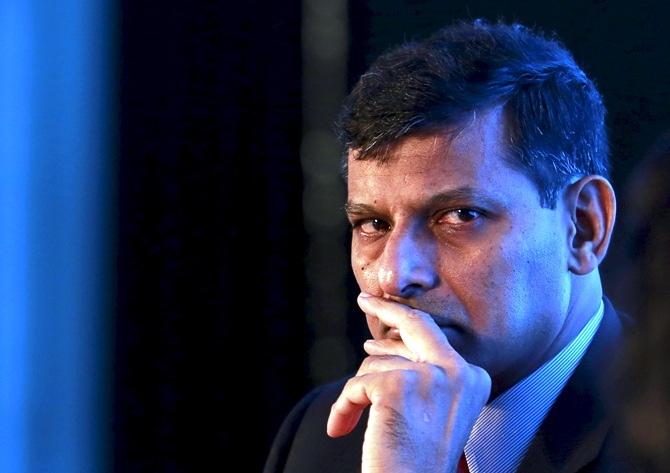
In the past, there have been instances of people getting fake e-mails in the name of RBI.

The Securities and Exchange Board of India (Sebi), in a circular dated April 11, 2025, warned investors about rising fraud and manipulation linked to the securities market on social media platforms.
The RBI also allowed banks to levy ATM charges beyond 5 transactions for the same bank's account holders.

The cash crunch following demonetisation and transaction fees that do not cover costs are among the reasons why the sector is struggling.
In a relief for foreign firms giving loans to Indian subsidiaries, tax authorities have said goods and services tax (GST) will not be imposed on them, subject to some caveats. Additional fees, commissions, or related payments - over and above the amount charged as interest - on these loans will attract GST at 18 per cent, the Central Board of Indirect Taxes and Customs (CBIC) has said.

A 26-year-old man, Anandu Krishnan, has been arrested for allegedly defrauding people across Kerala by promising them scooters, sewing machines, and home appliances at half price. The accused claimed to use Corporate Social Responsibility (CSR) funds from big companies. The case has taken a political turn with the involvement of Congress leader Lali Vincent, who served as a legal advisor to an NGO involved in the transactions. Vincent defended Krishnan and said he was not a fraudster, claiming he was made a scapegoat after those who promised CSR funds backed away. The case is being investigated by the Kerala police, who are also looking into the role of certain political leaders in the fraud.

rediffGURU T S Khurana answers readers' personal income tax queries.

National Payments Corporation of India (NPCI) on Wednesday said there is no charge for the bank account to bank account-based UPI payments or normal UPI payments.

Trump's sweeping tariffs and penalties on China-built ships have turned global shipping into the front line of economic war, observes Shyam G Menon.

A group comprising top tech startups and unicorns has raised several "serious concerns" over a platform-based gig workers Bill proposed by the Karnataka government, saying it would hurt the ease of doing business. They told the state government the Bill in its current form would hamper operations and increase regulatory and compliance burden on the nascent gig and startup economy, according to sources.

While a giant, it's a nimble-footed one, and is growing at a speed that even some of its private sector peers find enviable.
Between FY18 and FY24, it doubled its balance sheet. Despite being a late entrant in some segments, it has been able to grab market share, observes Tamal Bandyopadhyay.

The victim, who had a keen interest in stock market investments, was lured by fraudsters with promises of hefty returns on investments in stocks.

The interchange fee -- paid by the card-issuing bank when a customer swipes at another bank's ATM, including at white-label ATMs -- may be raised to Rs 20 to Rs 23.

Surge in UPI transactions is because of an increased consumer interest in making bill payments and recharging mobile phones online, and purchase of non-essential goods on e-commerce platforms.

Food delivery aggregator Swiggy saw its loss widen for the fourth quarter (January-March) of financial year 2024-25 (Q4FY25). The firm reported a consolidated loss of Rs 1,081.1 crore for the quarter, compared to a loss of Rs 554.7 crore in the corresponding quarter of FY24.



Shares of brokerages and market infrastructure institutions (MIIs) witnessed heavy selling pressure following the Securities and Exchange Board of India's (Sebi's) pivot to a uniform fee structure, which analysts fear could dent revenues. Discount brokerages, which currently benefit from a spread between client charges and exchange fees, are expected to be most affected. Shares of Angel One, the third-largest brokerage by active clients, fell 8.7 per cent. Groww and Zerodha, the largest brokerages, are not publicly listed.

BSE (formerly Bombay Stock Exchange) has seen its market share go past the critical 20 per cent mark in the derivatives segment, intensifying its battle with bigger rival - the National Stock Exchange (NSE) - which, less than a year ago, had a monopoly in this space. In April, the average daily trading volume (ADTV) for BSE stood at Rs 89 trillion, accounting for 20.6 per cent of the overall ADTV of Rs 432 trillion (based on notional volumes for options).

Crypto exchanges have been asked to furnish details this month itself.

Currently, the fee is Rs 15 per financial transaction. This has been recommended to be revised to Rs 16.50, plus service tax (12%), taking the amount to Rs 18.48.
The BSE faces a larger outgo after regulatory clarity on the fee to be paid to the Securities and Exchange Board of India (Sebi) as a turnover charge on options volume. The market regulator on Friday directed the exchange to pay a regulatory fee on the 'notional value' of annual turnover.

The $22.8 billion CK Hutchison ports deal intensifies geopolitical tensions between the US and China. Chinese media has already called it 'a betrayal of all Chinese people'. Shyam G Menon explains how the proposed sale will reshapes global trade infrastructure.

The charges would apply to savings as well as salary accounts

Seventeen persons, including four hailing from Taiwan, were arrested by Ahmedabad Cyber Crime Branch for allegedly operating a nationwide 'digital arrest' racket, a Gujarat police official said on Monday.

Isn't there something significant in the UPI example for all of us to learn from and execute to enable world-scale success for our startups?, asks Ajit Balakrishnan.

Even as State Bank of India, the country's largest lender, has decided to charge its customers for more than five transactions through automated teller machines (ATMs), private sectors banks continue to be on a wait-and-watch mode.

Payments and banking transactions through mobile phones in India are expected to touch $350 billion (Rs 1,560 crore) by 2015, according to The Boston Consulting Group (BCG), a global management consulting firm.

Co-location attracts institutional investors, which drives volumes for long-dated options, with higher realisations at lower costs.
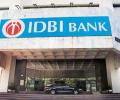
The strategic sale of government and state-owned Life Insurance Corporation (LIC) of India stakes in IDBI Bank might encounter procedural delays, potentially pushing the timeline for expected financial bids to the third quarter of the current financial year (2023-24, or FY24), according to sources familiar with the development. Financial bids constitute the second significant step in the divestment process, following expressions of interest (EoIs) from potential bidders. In this phase, bidders are required to quote transactional fee as a percentage of the divestment proceeds, which are then added to the government's kitty after completion of the transaction.

At present, there is no cap on free transactions at own-bank ATMs, while customers can use other banks' machines up to five times a month without any extra cost.
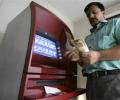
Second authentication for small value payments through credit cards can be reduced subject to conditions.

Privately, many bankers admit their immediate goal is not growth but slowing the erosion of Casa deposits, reveals Tamal Bandyopadhyay.
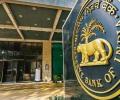
The Reserve Bank of India (RBI) has barred four non-banking finance companies (NBFCs), including two microfinance institutions (MFIs), from sanctioning and disbursing loans for charging exorbitant interest rates to the borrowers. These four entities are Asirvad Microfinance, Arohan Financial Services (also an MFI), DMI Finance, which provides personal, consumption, and micro, small and medium enterprises loans, and Flipkart co-founder Sachin Bansal's Navi Finserv, which offers home and personal loans. The ban will take effect on October 21 to "facilitate closure of transactions in the pipeline", the regulator said in a statement.

F&O trading is a zero-sum game where one person's loss is another's gain. Only one per cent of traders gained the money lost by 93 per cent, warns Harsh Roongta.

'Sebi had no problem with derivatives until trading exploded after Covid.' 'But now, having built a dangerous road, from which different entities, mainly governments, are extracting a heavy toll, Sebi is concerned that people are driving on it in much greater numbers,' explains Debashis Basu.

'We found certain banks having lakhs of such accounts with apparently no valid reason.'

Regularly monitor your account for any suspicious activity. Keep your devices updated with the latest security patches to prevent vulnerabilities. Ensure the physical wallet you use is stored securely to avoid loss or theft.
The remittance is limited to 12 transactions a year per sender, with a maximum amount of Rs 50,000 per transaction with a normal transaction fee of Rs 50 for an amount less than Rs 5,000 and Rs 75 for amount above Rs 5,000. It will be implemented by commercial banks under the national electronic fund transfer system.
